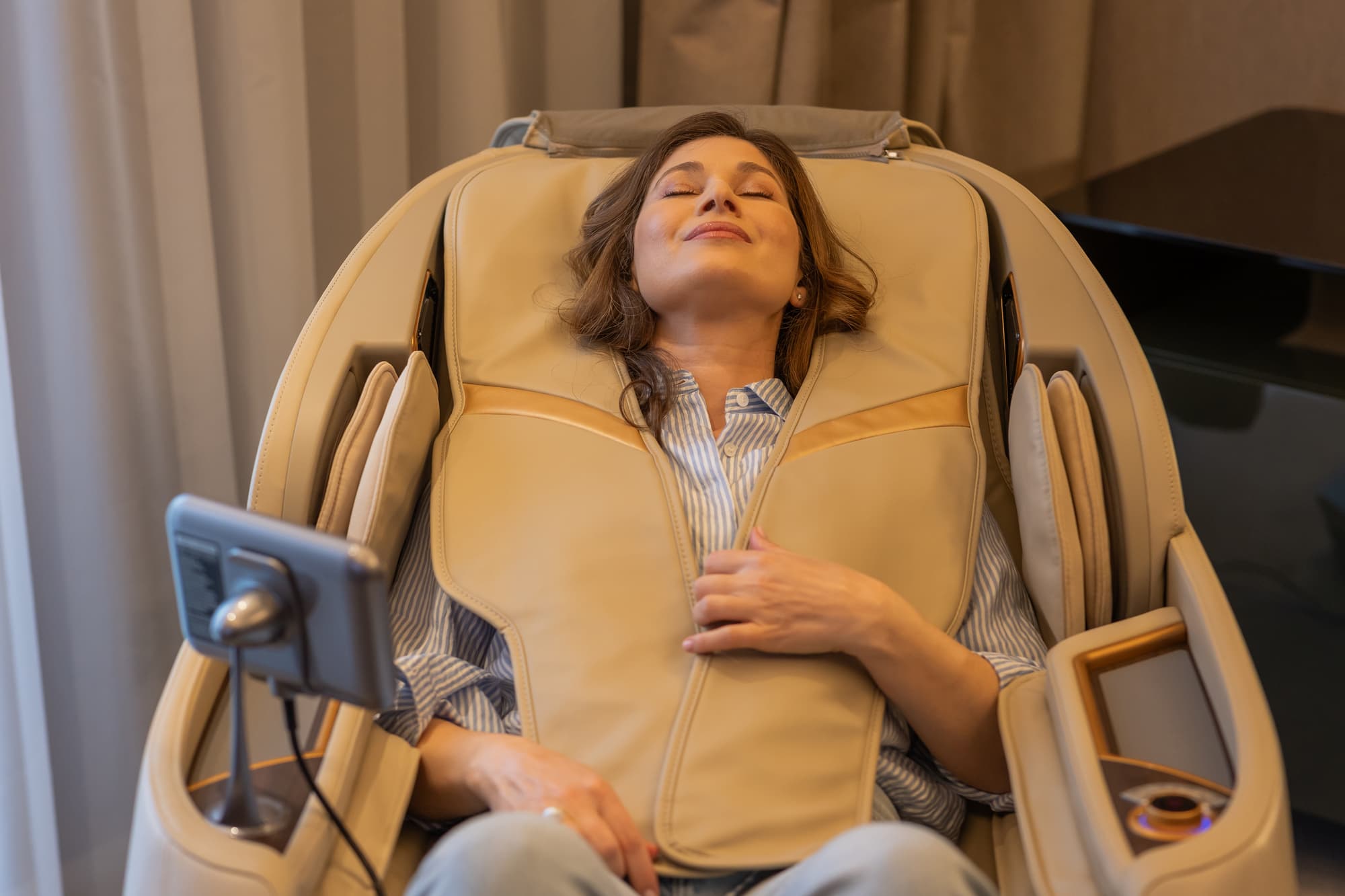
Spending too much time on phones, laptops, or in front of the TV can have unpleasant consequences for your health. Digital fatigue often manifests as tension and restlessness, along with a lack of focus or motivation to engage in other activities. If your job involves long hours in front of a screen, it’s important to find relaxation techniques and methods that can help you counteract these negative effects. A massage chair session can be one such method, helping you disconnect from stress, relax your muscles, improve your posture, and enjoy more restful sleep. In other words, it can serve as the perfect therapy to support your comfort and overall well-being after a full day of activity. Here are some of the additional benefits a massage chair can offer, along with key features of the technology behind it.
The hidden health costs of excessive screen time
In today’s hyper-connected world, where screens dominate both our professional and personal lives, the physical and mental effects of prolonged digital exposure are becoming impossible to ignore. Remote workers, digital creatives, gamers, and online students are all facing a common enemy, overstimulation caused by hours of screen time. As these pressures build up, many are turning to innovative wellness solutions to restore balance. Among them, massage chairs have emerged as a surprisingly effective remedy to combat screen time stress and digital fatigue.
Most people underestimate how damaging uninterrupted screen exposure can be. While smartphones, laptops, and tablets have revolutionized how we work and connect, they’ve also introduced a new category of health problems. Sitting for extended periods, maintaining poor posture, and the constant bombardment of information all take their toll on the body and mind.
Digital fatigue is more than just tired eyes. It includes chronic neck stiffness, back pain, poor circulation, headaches, and even reduced sleep quality. On a cognitive level, it often leads to burnout, mental fog, irritability, and difficulty concentrating. The shift toward remote work has only worsened these issues, turning homes into makeshift offices and eliminating the natural breaks and movement we used to get throughout the day.
By addressing these symptoms early and consistently, massage therapy, especially when built into a daily home routine, can help reverse many of these negative effects and support long-term wellness.
Massage chair benefits for remote workers and digital professionals
Massage chairs are no longer luxury items reserved for spas or high-end hotels. They’ve become an essential wellness tool for anyone whose lifestyle involves long hours at a desk or behind a screen. Their design and function target the specific areas most affected by digital strain. And, the best part, you can use a massage chair at home or at your office.
Targeted neck and shoulder relief programmes
One major benefit is their ability to relieve neck and shoulder tension, often referred to as “tech neck”. This common issue stems from leaning forward to look at screens, which places added pressure on the upper spine and leads to muscle tightness and pain. High-quality massage chairs apply kneading and rolling techniques in these problem areas, helping users regain mobility and reduce inflammation.
Spinal decompression after long sitting periods
Lower back pain is another widespread issue among sedentary workers. Massage chairs with spinal decompression features allow the user to recline while their spine is gently stretched, mimicking therapeutic movements used by chiropractors. This not only provides immediate relief but also supports proper spinal alignment over time, reducing the risk of chronic discomfort.
Improving circulation in sedentary workers
Circulation is another often-overlooked concern. Long periods of inactivity lead to reduced blood flow, especially in the legs, which can cause swelling, numbness, and fatigue. Massage chairs improve circulation through rhythmic compression, vibration, and heat, which together stimulate blood flow and oxygen delivery throughout the body. This helps digital professionals feel more energized and less sluggish after long work sessions.
By incorporating these functions into a daily routine, users create a buffer against the long-term effects of digital overexposure, improving both productivity and overall quality of life.
Specific massage techniques that counter digital stress
What sets massage chairs apart from basic ergonomic chairs or standing desks is their use of advanced, therapeutic techniques traditionally employed in professional massage therapy. These include methods like shiatsu, rolling, and compression, all tailored to target the effects of prolonged screen use.
Shiatsu techniques apply focused pressure to specific points on the body, helping release blocked energy and relieve deep-set tension. This method is especially helpful for individuals suffering from stress-related symptoms like jaw clenching, headaches, or stiffness in the shoulders and upper back.
Rolling massages simulate the motion of hands running along the spine, which promotes flexibility, improves posture, and relaxes the muscles that contract during hours of sitting. Meanwhile, air compression features in modern chairs gently squeeze and release around the arms, thighs, and calves, reducing muscle stiffness and stimulating blood flow in areas that remain inactive during long screen sessions.
Integrated heat therapy further enhances the relaxation response. When combined with massage movements, warmth penetrates deep into muscle tissue, loosening knots and reducing inflammation. This layered approach helps the body recover from both the physical and psychological stress of digital fatigue.
Together, these massage techniques offer a comprehensive way to counteract the physical manifestations of screen-related tension, bringing users back to a more centered, grounded state.
Creating a digital detox routine with massage therapy
The idea of a digital detox often feels unrealistic in a world where screens are essential for both work and communication. But even without a full break from technology, creating intentional recovery rituals can make a significant difference. Massage therapy fits naturally into this kind of wellness routine.
A powerful strategy involves carving out a fixed time each evening - ideally before bedtime - to use the massage chair in a quiet, screen-free environment. This helps the body transition from a stimulated, alert state into a restful one. The act of setting aside this time creates a boundary between the online and offline parts of your day, reinforcing mental discipline and promoting better sleep.
Adding sensory elements such as soft lighting, essential oils, or calming music enhances the relaxation experience, making your massage session a true escape from digital noise. Over time, this ritual can train the nervous system to wind down more quickly and deeply, reversing the overactivation that screens often trigger.
The result is a sustainable routine that not only reduces physical discomfort but also restores mental clarity and emotional balance - essential elements in any strategy to combat screen time stress and digital fatigue.
Best massage chair features for screen time recovery
Not all massage chairs are created equal, especially when it comes to treating symptoms associated with excessive digital exposure. For those seeking targeted recovery from screen-related tension, certain features make a significant difference.
The zero-gravity recline function, inspired by astronaut seating, elevates the legs to align with the heart, which decompresses the spine and enhances the massage effect. This position also improves blood circulation and creates a sensation of weightlessness, further deepening relaxation.
Body scanning technology is another valuable feature. It customizes each session by detecting the user’s height and body contours, ensuring that massage rollers are aligned perfectly with key muscle groups and joints. This kind of precision is crucial for effective relief, especially for users dealing with chronic neck or lower back pain.
Some of the most beneficial massage chairs also offer multiple preset programmes tailored to different needs, such as upper back tension, full-body recovery, or mental de-stressing. Air compression systems play a key role in restoring vitality to the arms and legs, while integrated heat therapy supports muscle recovery and reduces inflammation after long workdays.
Ease of use also matters. Many modern models come with remote controls or smartphone apps that make it simple to adjust settings or schedule sessions. This convenience ensures that even the busiest professionals can incorporate wellness into their routines without hassle.
Ultimately, the best chair is the one that fits both your body and your lifestyle. When chosen carefully, it becomes more than a relaxation tool. It becomes a personal wellness assistant that helps you navigate the challenges of a screen-centric world.
As digital life becomes more demanding, self-care must evolve with it. While blue light glasses and ergonomic desks have their place, they don’t address the root causes of physical tension and mental fatigue. Massage chairs, on the other hand, offer a comprehensive and convenient way to combat screen time stress and digital fatigue from the comfort of your own home.
They bring together science-backed techniques, advanced technology, and daily accessibility, empowering users to take control of their health in a world that rarely pauses. If your body feels drained, your mind overstimulated, and your sleep disrupted by endless screen use, it may be time to invest in a wellness solution designed for modern life. Massage therapy isn’t just a luxury anymore. It’s a necessity for digital well-being.