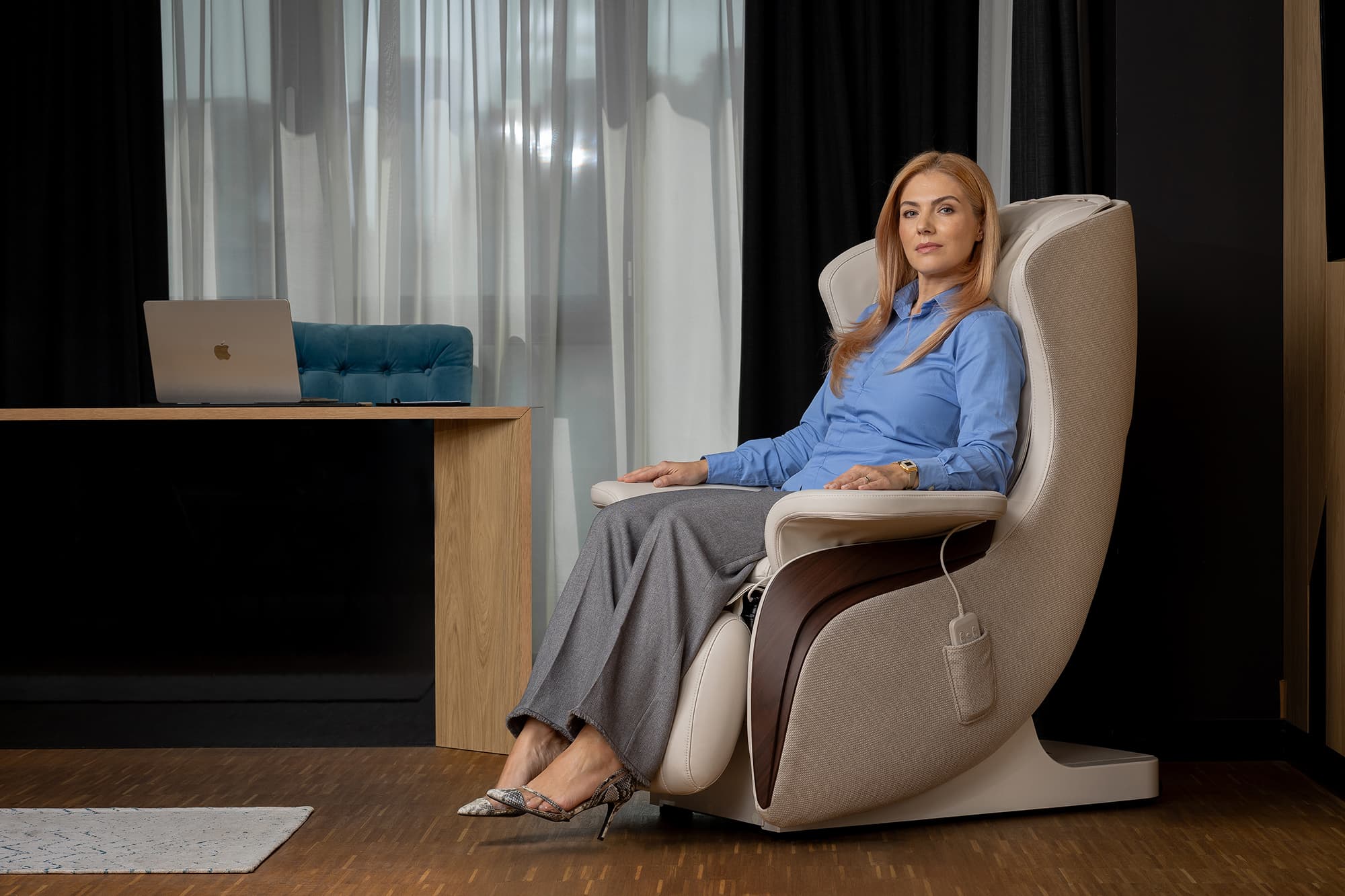
An overly cluttered space can become a factor that overwhelms you even more after a tiring day. That’s why order plays an essential role. When arranging a room, you shouldn’t fill the space with too much furniture and other items that only create visual congestion. Ideally, you should focus on those statement pieces that can bring added value to your home. Besides being elegant, the massage chairs from Komoder can bring the relaxation ritual right into your own home. Below are a few things about home environments that are important to know!
The link between home design and mental health
In recent years, the dialogue around mental health has expanded beyond therapy, nutrition, and lifestyle habits to include the very places we live in. The notion that our home environments can either alleviate or amplify stress is gaining traction in both design and psychological circles. A house is not just a backdrop, it is a participant in our emotional life. When your surroundings feel cluttered, cold, conspicuous, or unsupportive, small daily irritations accumulate. A squishy sofa that offers no back support, a work desk that forces poor posture, or a poorly lit corner can each contribute to a creeping sense of unease.
Neuroscientists and environmental psychologists point out that we are sensitive to spatial cues: color, texture, layout, acoustics, and even furniture ergonomics can send signals to our brain about safety, rest, and tension. A cramped layout with hard edges might keep us in a low‐level alert state; soft curves and tactile materials tend to soothe. As people increasingly spend more time at home, working remotely, relaxing, or socializing, the boundary between “work stress” and “home refuge” blurs. That makes it ever more critical to get the interior choices right.
Furniture is central to that process. Because we physically engage with it, sitting, leaning, resting, it has a direct line to our muscles, circulation, and nervous system. A chair that forces you to hunch or strain will send stress signals to your brain; by contrast, a well designed seating object can cue your body to relax, decompress, and rest. Understanding that link is the first step toward building a home environment that supports, not undermines, your peace of mind.
How uncomfortable furniture increases stress levels
Picture this: after a long day, you slump onto your couch or chair, hoping for relief. But instead, you find yourself creeping forward, shifting position, trying to prop a cushion behind your lower back just to sit for ten minutes. Meanwhile your neck scrunches forward, shoulders tense, legs numb. That slow accumulation of micro-discomforts, backache, tight hips, neck tension, doesn’t feel dramatic right away, but over weeks and months it builds a baseline of low‐grade stress.
What is happening physiologically is that your muscles never truly relax. They compensate, hold tension, and fatigue. Circulation becomes restricted in certain zones; nerve pathways get irritated. The brain notices discomfort or tension and continues to register it as a mild stressor, even during your downtime. That means your “resting” moments become colored by unease. Over time, that persistent background stress can degrade mood, sleep quality, and even immune function.
Worse, if your furniture forces you into suboptimal posture, say, your workstation chair lacks lumbar support or your seat forces your knees too high or low, you may find yourself repeatedly adjusting, shifting, or getting up. That disrupts the calm we crave at home. Especially with the prevalence of remote work, people may sit for longer hours at home than ever before, so the slip from comfort to strain is easily unnoticed until tension becomes the norm.
In short, uncomfortable furniture doesn’t just make you fidgety: it hijacks your body and brain, raising cortisol levels, increasing muscle fatigue, and dulling your capacity for psychological rest.
The role of ergonomics in reducing daily tension
Ergonomics is the science of making environments suit the human body. In furniture terms, it means designing and selecting pieces that align with how we move, rest, and shift. Good ergonomic design lets your spine take a natural “S” curve, supports joints in neutral positions, and allows variation of posture rather than rigid stasis. That variability is important: our bodies were not meant to stay in one position for long.
An ergonomic chair ensures that your thighs are level or gently sloping, feet flat on the floor (or on a footrest), your hips slightly above knees, and your back supported, especially in the lumbar region. A seat with good depth allows you to sit back without pressing the backs of your knees. Armrests at the correct height relieve tension in shoulders. All of these reduce the small muscular “corrections” your body would otherwise make unconsciously throughout the day.
But ergonomics is not only about “work chairs”. It applies to living rooms and bedrooms too. A lounge chair that allows you to relax without cranking your neck or twisting your torso is better for stress reduction. A sofa that supports your back when you read or watch TV is an ergonomic choice, even if subtly so. Textiles, cushioning firmness, and recline angles also matter. And importantly, ergonomics invites flexibility: adjustable furniture (reclining, footrests, modular pieces) gives your body options to shift.
Applied well, ergonomic furniture reduces micro-stress, letting your nervous system shift out of fight-or-flight mode and into parasympathetic rest.
Choosing furniture that supports relaxation and wellness
When selecting furniture that nurtures wellbeing, the goal is to blend function, comfort, and aesthetics so the home becomes a sanctuary, not a covert stress generator. Think of pieces that do double duty: supportive enough for work or everyday use, but also conducive to rest, adjustments, and recovery. Before buying, consider how long you’ll sit in that piece daily, how many posture shifts you’ll need, and whether it invites tension or relief.
One category of furniture that embodies this dual purpose is the massage chair. On the Komoder UK site, you will find a line of electric massage chairs explicitly marketed for home environments. Komoder’s models, such as the FOCUS II massage chair, feature features like multiple automatic programs, heating, zero-gravity positioning, and compact design ideal for domestic spaces.
Our range includes premium chairs such as TITAN II Ultra High-end Dual Track Massage Chair, which offers 24 automatic massage programs, a dual-track mechanism, and white glove delivery within the UK. Because at Komoder we emphasize both therapeutic benefit and elegant aesthetics, our chairs can sit comfortably in living rooms or wellness corners without feeling out of place.
Massage chairs as multifunctional pieces
At-home massage chairs are not simply luxurious add-ons, they can become central to one's stress management strategy. Here’s how:
First, they physically intervene on tension. Through rollers, airbags, heat, and rhythm, massage chairs can help relieve muscle knots, improve blood circulation, and stimulate endorphin release. Many Komoder models tout features like “intelligent hands” which simulate human touch through multi-dimensional rollers. For people who spend hours seated at desks at work, the ability to decompress en masse by reclining into a massage chair is a powerful reset.
Second, they integrate into daily routines. Because they are furniture, not medical devices demanding special setup, they invite regular use. A brief session before work, midday break, or evening wind-down can help bracket your day with relief. Their design often supports multiple positions (reclining, zero gravity), meaning that your body isn’t locked in one posture.
Third, the visual presence of a premium, wellness-oriented piece sends a psychological signal: this space is devoted to recovery. That in itself cues your mind that rest and wellbeing are priorities. Compared to an awkward recliner or folded blanket cushion, a massage chair brings dignity to the act of self-care.
Fourth, because many models are elegantly designed, they don’t shrink the personality of a room.
Small design changes that make a big difference in wellbeing
You don’t have to overhaul your home to make meaningful improvements in mental comfort. Sometimes modest adjustments to layout, lighting, or furniture positioning can yield outsized benefits.
Start with light: natural light, filtered through soft curtains, helps regulate circadian rhythms and lift mood. Position seating so that daylight falls softly on you (without glare). Use warm, indirect accent lighting in the evenings to cue calm.
Then consider the “pause zones”: corners or niches where you can sit quietly, away from screens, with comfortable seating (perhaps your massage chair or a recliner). Sometimes simply having a clear, dedicated space that is “not work” makes a psychological difference.
Furniture arrangement matters too. Avoid obstructing paths, clustering too many heavy pieces in visual territories. Let negative space breathe. Make sure your seating invites facing valued views (window, art, indoor plants) rather than blank walls.
Switch out harsh materials. Replace rigid plastic backs with padded textures, introduce natural materials like wood, textiles with softness, and upholstery that touches skin kindly. Use cushions, throws, or layers so that your body doesn’t “feel” the raw frame of a chair.
Add movement-friendly furniture. Pieces that swivel, recline, or rock encourage micro-adjustments rather than frozen postures. Even a footstool or ottoman can help you shift leg positions throughout the day, keeping your body more dynamic and less stiff.
Consider acoustic comfort too: rugs, wall fabrics, curtains, bookcases, or plants reduce echo and soften sound, creating an auditory buffer that reduces tension. Your environment should speak softly, not shout.
Finally, declutter. Visual clutter taxes the brain by constantly demanding scanning and suppression. A tidy, curated selection of furniture, each serving a role, can reduce cognitive load and allow your mind to rest.
Why investing in comfort is the new self-care trend
In the past decade, self-care was often cast in consumables, spa vouchers, candles, supplements. But as people recognized that stress is cumulative and ambient, attention has shifted to the environments we inhabit. Investing in comfort, furniture that supports posture, relaxation, and motion, is the next frontier in self-care.
Comfort does not mean laziness or passivity. Rather, it is an act of acknowledgment: you deserve environments that respect your body, reduce friction, and signal rest. When your furniture actively supports recovery (like a massage chair), it becomes a partner in your wellness journey. You're not just buying an object, you are buying time, ease, and relief.
When people begin to view furniture not just as functional props but as cues and supports for mental health, we witness a shift in home culture. The sofa is no longer just a place to sit; it becomes a place to restore. The chair isn’t just a component, it is a daily ritual. Ergonomics and wellness converge.
In the stress dynamics of modern life, comfort becomes resistance. It is a shield against the erosion of calm. We invest not in extravagance, but in environmental resilience.