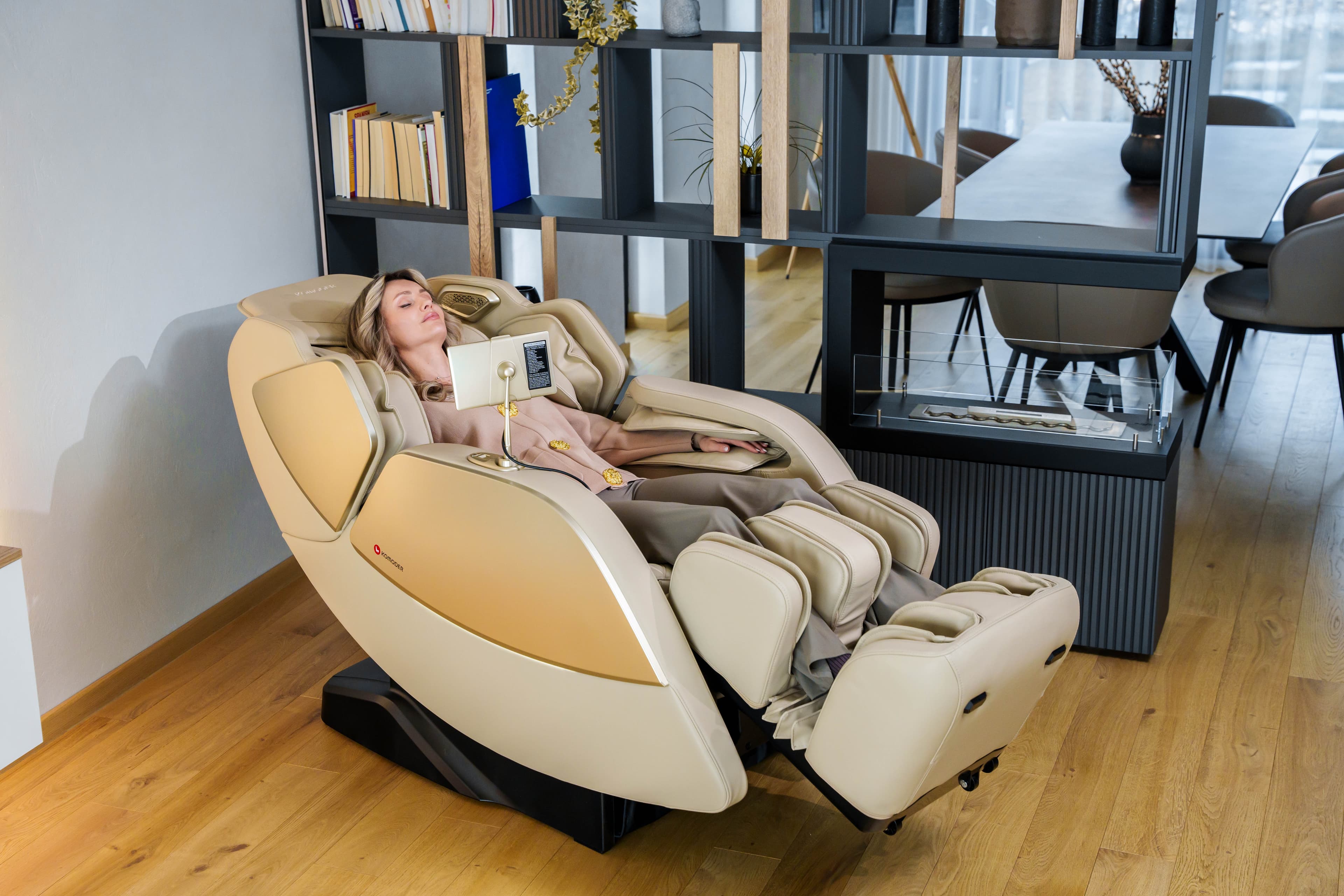
When choosing a massage chair, it’s important to consider not only the technical specifications but also the built-in features it offers. This is where the concept of the track system comes into play. Understanding SL track vs. L track in modern massage chairs is essential. With a deeper look into this topic, you’ll discover the main characteristics and benefits of each type. So, here's what you need to know when deciding between SL and L track types, how they function, what their strengths are, and which system is better suited for various health conditions and personal needs.
Massage chair track technology explained
As massage chair technology advances, consumers are increasingly confronted with an important choice: SL Track vs L Track massage chairs. While these terms appear frequently in product descriptions and reviews, many buyers remain unsure what they truly mean or how much they actually matter. The truth is, your entire massage experience can be defined by the track system your chair uses.
Massage chairs work by using rollers that move along a track to simulate human touch. The configuration of this track determines which parts of your body are massaged, how deeply the rollers penetrate muscles, and how naturally the motion follows your spine.
Over time, track design has evolved from simple vertical paths to more anatomically advanced shapes. Today, two dominant systems exist: the L track and the SL track.
What is an L track massage chair system?
The L track is named for its shape, resembling the letter “L.” It begins at the neck and continues along the natural curve of the spine before extending underneath the seat to reach the glutes and, in some cases, the hamstrings. This design was a major leap forward from earlier systems that stopped at the lower back.
The primary advantage of L track massage chairs is their extended range. By moving beyond the lumbar region, they provide consistent therapeutic coverage to the lower body - especially the gluteal muscles, which are critical in managing sciatica or tight hips caused by sedentary lifestyles.
Another important feature of L tracks is their mechanical simplicity. With a linear motion and relatively straightforward engineering, L track chairs are often more affordable and space-efficient than their more advanced counterparts. However, this design comes with a trade-off: it doesn’t always conform to the natural curvature of the spine, which can result in uneven roller pressure.
Understanding the SL track technology
SL track systems combine the best of two worlds: the spinal alignment of an S track and the extended reach of an L track. The “S” component allows the rollers to follow the natural curve of your spine, maintaining consistent pressure along the cervical, thoracic, and lumbar regions. Meanwhile, the “L” portion extends the track under the seat to provide coverage to the glutes and upper thighs.
What distinguishes the SL track is its ergonomic versatility. It supports proper posture, provides deeper muscle relief, and allows the rollers to transition seamlessly from the back to the seat. This technology is especially beneficial for individuals with spinal irregularities, chronic lower back pain, or muscular imbalances in the hips.
However, the more complex mechanics of SL track systems often come at a higher cost and may require more space, particularly when the chair fully reclines.
L track massage chairs: benefits and limitations
L track massage chairs remain a popular choice among users seeking practical benefits at a competitive price point. Their ability to reach the glutes makes them particularly effective for individuals suffering from sciatica, piriformis syndrome, or muscular fatigue from long hours of sitting.
Another benefit lies in their simplicity. Many L track models are compact, feature zero wall space-saving designs, and include modern enhancements such as Bluetooth speakers or heated lumbar zones. Because of their simpler structure, they also tend to be more durable and easier to maintain.
Yet despite these strengths, L track massage chairs don’t always excel in spinal adaptability. Since their path is more rigid, users with pronounced spinal curves or posture-related conditions might experience uneven roller contact, especially in the upper back and neck areas. While some high-end L track chairs attempt to counter this with dynamic body scanning, they still don’t quite replicate the ergonomic finesse of an SL track system.
SL track advantages: the evolution of massage chair technology
SL track chairs represent the pinnacle of current massage chair engineering. By harmonizing anatomical precision with extensive coverage, they deliver a massage that feels both natural and complete. For many users, this design eliminates the sensation of disjointed movement or roller gaps, offering a smooth, uninterrupted experience from neck to thighs.
One of the key selling points is therapeutic consistency. Whether you're dealing with scoliosis, herniated discs, or general back fatigue, the SL track provides a more tailored experience that adjusts to your body’s natural shape. This results in better contact with pressure points, deeper muscle engagement, and improved spinal decompression, especially when paired with zero gravity recline features.
SL track massage chairs often come with a more luxurious feel and enhanced features, such as 4D roller systems, AI-powered massage programs, and advanced stretch modes. However, they also require a more generous budget and, in many cases, more physical space in your home.
For many buyers comparing SL Track vs L Track Massage Chairs, this upgrade is justified by the added comfort, range, and adaptability that SL models provide.
Which track system is better for different health conditions
When it comes to choosing between L track and SL track chairs, there’s no universal answer, only the best choice for your specific needs. To simplify your decision, consider your most frequent complaints or therapy goals.
If you suffer from gluteal pain, tight hips, or sciatica, an L track chair may provide adequate relief without the added complexity or cost of an SL track. The focused attention on the lower body is usually sufficient for sedentary users or those recovering from light muscle fatigue.
However, if your issues involve spinal tension, irregular posture, or full-back fatigue, the SL track becomes the more suitable option. Its ability to align with spinal curves while still covering the entire posterior chain makes it ideal for users with more complex needs, especially older adults or athletes in recovery.
People with postural imbalances or scoliosis also tend to benefit more from SL track systems, as the rollers conform more closely to each vertebra and help promote realignment.
In short, SL Track vs L Track Massage Chairs is not just a technical comparison, it’s a therapeutic decision. Each system serves a specific purpose, and knowing your body’s needs is the first step to making the right investment.